
How to Build a Morning Routine That Actually Sticks (For Dads)

By Sara Deleon • July 22, 2026
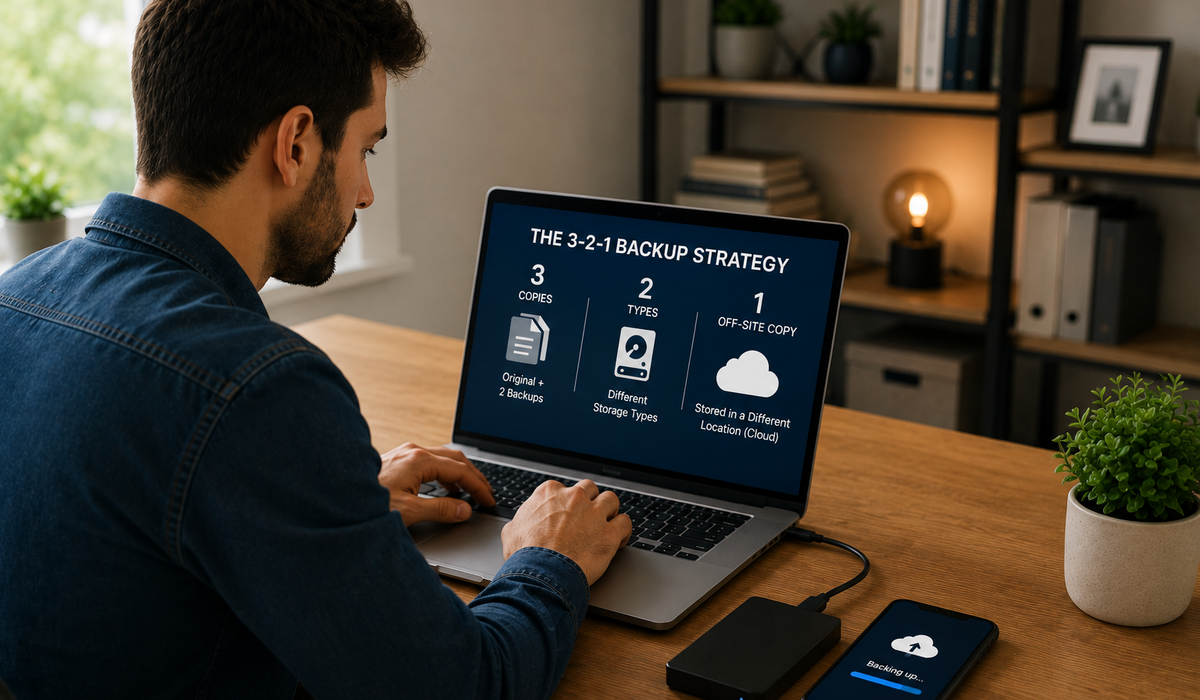
Your photos, documents, and personal files often represent years of memories and important work. Unfortunately, many people don’t think about backups until after a laptop crashes, a phone is lost, or a hard drive fails. By then, recovering those files can be expensive—or impossible.
The good news is that backing up your data doesn’t have to be complicated. With a simple backup strategy, you can protect your most valuable files and avoid the stress of unexpected data loss.
Many people assume that storing files on their computer or smartphone is enough. In reality, devices can fail, be stolen, become infected with malware, or suffer accidental damage.
Cloud storage is helpful, but it shouldn’t always be your only backup. If files are accidentally deleted or synced incorrectly, those changes may also be reflected in the cloud.
The safest approach is to keep multiple copies of important files in different locations. This reduces the chance that a single problem will result in permanent data loss.
Thinking about backups before something goes wrong is much easier than trying to recover lost memories afterward.
One of the most widely recommended backup methods is known as the 3-2-1 rule.
Keep three copies of your important files: the original and two backups. Store them on two different types of storage, such as your computer and an external hard drive. Finally, keep one copy off-site, such as in a secure cloud storage service.
This approach protects against a wide range of problems, including hardware failures, theft, accidental deletion, and natural disasters.
You don’t need expensive equipment to follow this strategy. Many people can implement it using a computer, an external drive, and a reliable cloud storage account.
The best backup system is the one you don’t have to remember.
Most operating systems and cloud services allow automatic backups that run in the background. Once configured, your files can be backed up daily or whenever your device connects to Wi-Fi or an external drive.
Automatic backups reduce the risk of forgetting to save important photos or documents. They’re especially useful for smartphones, where new photos and videos are constantly being created.
Even if you occasionally perform manual backups, automation provides an extra layer of protection.
A backup is much more useful if you can easily find what you need later.
Create clear folders for photos, personal documents, financial records, work files, and other important information. Give files meaningful names instead of relying on generic titles like “Document1” or “IMG_1234.”
Delete duplicate or unnecessary files occasionally to keep your backups organized and reduce storage requirements.
Good organization also makes restoring files much faster if you ever need to replace a device.
Many people assume their backups are working without ever checking them.
Every few months, verify that your backup system is running correctly by opening a few files from your backup location. Confirm that recent photos, documents, and other important files have been copied successfully.
If you’re using an external hard drive, make sure it’s still functioning properly. If you rely on cloud storage, verify that synchronization is working and that your most recent files are available.
A backup that can’t be restored isn’t much of a backup at all.
Backups should be secured just like your original devices.
Use strong passwords and enable two-factor authentication for cloud storage accounts to help prevent unauthorized access. Encrypt external drives whenever possible, especially if they contain sensitive financial, personal, or business information.
Keep software updated on both your devices and your backup solutions to reduce security risks.
If you use an external hard drive, store it somewhere safe and separate from your primary computer so both aren’t lost or damaged in the same incident.
Backing up your photos and files isn’t just about protecting data—it’s about protecting memories, important documents, and years of hard work. By keeping multiple copies, automating your backups, organizing your files, testing them regularly, and securing your backup locations, you can greatly reduce the risk of losing what matters most. A little preparation today can save countless hours of frustration and heartbreak in the future.

Fatherhood has changed significantly over the past few decades. While previous generations often focused primarily on providing financially for their families, many fathers today are embracing a broader role—one that includes caregiving, emotional support, household responsibilities, and active involvement in their children’s everyday lives.

Every family, workplace, or group of friends seems to have someone who quietly carries more than anyone realizes. He’s the one people depend on when something goes wrong. He stays calm during difficult moments, solves problems without complaining, and keeps moving forward even when life feels heavy.

Fatherhood isn’t usually defined by one extraordinary moment. It’s built through thousands of ordinary ones—making breakfast before school, showing up to soccer practice, reading one more bedtime story, listening after a difficult day, and being there when your child simply needs you.

Not every week is about chasing big goals or celebrating major achievements. Some weeks are simply about keeping everything moving—meeting deadlines, looking after your family, managing responsibilities, and finding enough energy to do it all again tomorrow.

Some dads seem to stay calm no matter what life throws at them. They handle busy mornings, unexpected setbacks, work stress, and family responsibilities without appearing constantly overwhelmed. It isn’t because their lives are easier or because they never feel stressed. More often, it’s because they’ve developed habits that help them respond thoughtfully instead of reacting emotionally.

Many people start an exercise routine with enthusiasm, only to stop a few weeks later. The problem usually isn’t a lack of motivation—it’s trying to follow a plan that doesn’t fit real life. Long workouts, unrealistic expectations, and an all-or-nothing mindset often make consistency difficult.