
How to Build a Morning Routine That Actually Sticks (For Dads)

By Sara Deleon • July 22, 2026
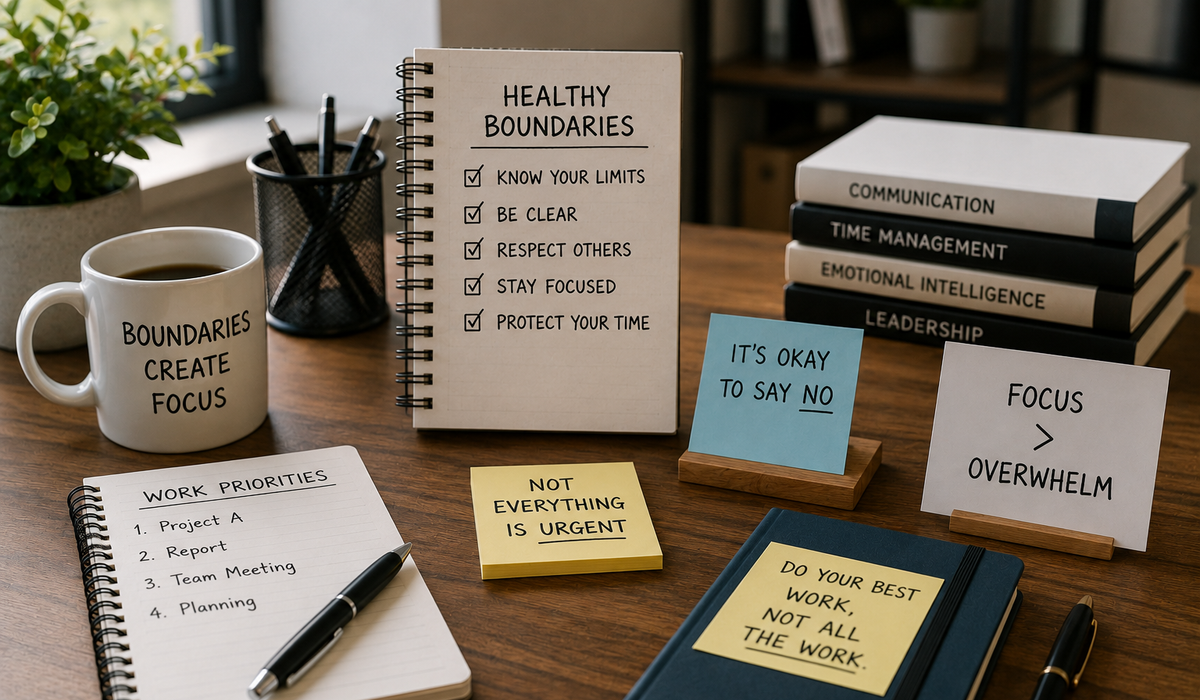
Setting boundaries at work can feel risky. You may worry that saying no will make you seem uncooperative, less committed, or difficult to work with. But healthy boundaries aren’t about avoiding responsibility—they’re about protecting your time, energy, and ability to do your best work consistently.
The most respected professionals aren’t necessarily the ones who say yes to everything. They’re often the ones who communicate clearly, manage expectations well, and deliver high-quality work without becoming overwhelmed. Learning how to set boundaries professionally can strengthen your relationships at work rather than damage them.
Many workplace problems begin with small habits that gradually become the norm. You stay late to finish one project, answer emails every weekend, or agree to take on extra tasks “just this once.” Over time, those exceptions can become expectations.
Pay attention to signs that your boundaries need adjustment. Feeling constantly overwhelmed, missing personal commitments, struggling to disconnect after work, or regularly taking on responsibilities outside your role may indicate that it’s time to make changes.
Recognizing the problem early makes it easier to address before frustration or burnout sets in.
The way you communicate your boundaries matters just as much as the boundary itself.
Instead of simply refusing requests, explain your current workload and priorities. For example, rather than saying, “I can’t do this,” you might say, “I’m currently focused on completing the client presentation due tomorrow. If this new task is a higher priority, I’d be happy to discuss which project should take precedence.”
This approach shows that you’re committed to supporting the team while being realistic about your capacity.
Using calm, professional language helps prevent conversations from feeling confrontational and encourages collaborative problem-solving.
Saying no doesn’t have to be negative. In many cases, it’s a sign that you’re managing your responsibilities responsibly.
When declining a request, be polite but direct. Avoid overexplaining or apologizing excessively. If appropriate, suggest an alternative timeline or recommend another resource that may be able to help.
For example, if you’re asked to join a meeting that isn’t essential to your role, you might explain that you’re focusing on a project deadline but would be happy to review the meeting notes afterward.
A respectful no often earns more respect than agreeing to something you don’t have time to complete well.
Boundaries work best when they’re established proactively rather than during moments of frustration.
If you don’t typically respond to emails after work hours, communicate that clearly. If your schedule is fully booked, let colleagues know when you’ll realistically be available instead of leaving them guessing.
Managers also appreciate transparency. Informing your supervisor early when your workload becomes unmanageable gives them an opportunity to adjust priorities or redistribute tasks before deadlines are affected.
Clear expectations reduce misunderstandings and help everyone plan more effectively.
Healthy workplace boundaries go both ways.
Avoid expecting immediate replies outside working hours unless something is genuinely urgent. Respect colleagues’ vacation time, lunch breaks, and scheduled focus time whenever possible.
When teams consistently respect one another’s time and workload, collaboration often improves. Employees are more likely to communicate openly, trust one another, and maintain higher levels of productivity over the long term.
Modeling the behavior you’d like to receive helps create a healthier workplace culture.
Setting boundaries isn’t about creating distance—it’s about creating sustainable working relationships.
People are more likely to trust colleagues who communicate honestly than those who agree to every request and later miss deadlines or produce rushed work. Reliability comes from understanding your limits and managing them effectively.
Remember that boundaries can evolve as your role changes. During busy periods, you may temporarily take on additional responsibilities, while quieter periods may allow for greater flexibility. The important thing is maintaining open communication throughout those changes.
Healthy boundaries protect both your well-being and the quality of your work. By communicating respectfully, managing expectations, and remaining collaborative, you can protect your time without damaging professional relationships. In the long run, clear boundaries don’t weaken your career—they often make you a more dependable, productive, and respected colleague.

Fatherhood has changed significantly over the past few decades. While previous generations often focused primarily on providing financially for their families, many fathers today are embracing a broader role—one that includes caregiving, emotional support, household responsibilities, and active involvement in their children’s everyday lives.

Every family, workplace, or group of friends seems to have someone who quietly carries more than anyone realizes. He’s the one people depend on when something goes wrong. He stays calm during difficult moments, solves problems without complaining, and keeps moving forward even when life feels heavy.

Fatherhood isn’t usually defined by one extraordinary moment. It’s built through thousands of ordinary ones—making breakfast before school, showing up to soccer practice, reading one more bedtime story, listening after a difficult day, and being there when your child simply needs you.

Not every week is about chasing big goals or celebrating major achievements. Some weeks are simply about keeping everything moving—meeting deadlines, looking after your family, managing responsibilities, and finding enough energy to do it all again tomorrow.

Some dads seem to stay calm no matter what life throws at them. They handle busy mornings, unexpected setbacks, work stress, and family responsibilities without appearing constantly overwhelmed. It isn’t because their lives are easier or because they never feel stressed. More often, it’s because they’ve developed habits that help them respond thoughtfully instead of reacting emotionally.

Many people start an exercise routine with enthusiasm, only to stop a few weeks later. The problem usually isn’t a lack of motivation—it’s trying to follow a plan that doesn’t fit real life. Long workouts, unrealistic expectations, and an all-or-nothing mindset often make consistency difficult.